
Introduction
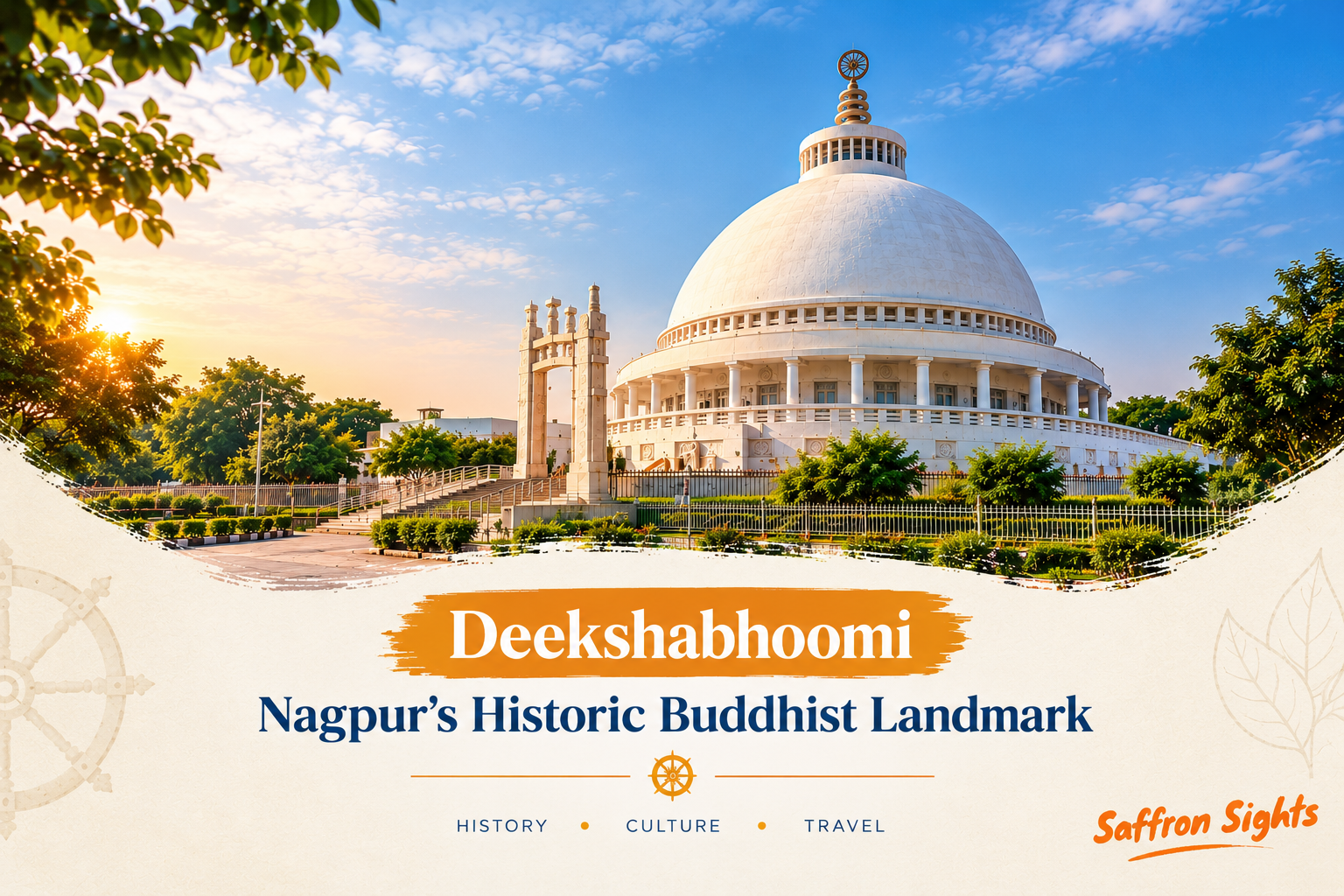
Deekshabhoomi in Nagpur, Maharashtra, is a white stupa marking the place where Dr. B.R. Ambedkar embraced Buddhism on 14 October 1956. He did it publicly, alongside a vast crowd of followers, most of them from Dalit communities that had faced untouchability for generations.
For Buddhists, it is a pilgrimage site. For students of Indian history, it is a place where religion, caste, and the idea of equal citizenship came together in one day. This guide explains what happened here, why Nagpur was chosen, what you will see at the site, and how to plan a respectful visit.
What Happened at Deekshabhoomi in October 1956?
On 14 October 1956, Ambedkar took the Three Refuges and Five Precepts of Buddhism in Nagpur. The ceremony took place on Ashoka Vijayadashami, a day linked with the Mauryan emperor Ashoka’s turn to Buddhism. Ambedkar received the vows from the monk Bhadant U. Chandramani, then administered them to the crowd.
He added 22 vows of his own, which set out a moral and social code for the new converts. They include a belief in equality, a rejection of caste distinctions, and a commitment to honesty and compassion. Some vows also reject the worship of certain Hindu deities and rituals. That reflected Ambedkar’s view of caste as part of the religious order, and it remains a topic of debate today.
How many people converted?
Reports vary. Figures from a few hundred thousand to around half a million appear in different sources, and no single count is fully agreed. Treat claims like “the largest conversion in history” as popular descriptions, not settled fact. Reports also describe further conversions in the following days, including at Chandrapur.
Who Was Dr. B.R. Ambedkar, and Why Did He Choose Buddhism?
Ambedkar (1891–1956) was a jurist, economist, and social reformer. He chaired the Drafting Committee of India’s Constitution and served as independent India’s first law minister. He also spent his life fighting untouchability.
His path to Buddhism was long. In 1935, at Yeola, he declared that he had been born a Hindu but would not die one. He then spent about twenty years studying religions before making his choice. His book The Buddha and His Dhamma sets out his reading of Buddhism as a rational, ethical path. It was published after his death.
He died on 6 December 1956, less than two months after the ceremony. That makes Deekshabhoomi one of the last great public events of his life.
A note on “Navayana”: Many writers call Ambedkar’s approach Navayana (“new vehicle”) Buddhism. It stresses social ethics, reason, and equality. Some followers simply call themselves Buddhists and prefer not to use the label. Both usages exist.
Why Nagpur?
Ambedkar gave historical and practical reasons for choosing Nagpur. According to accounts of his speeches, he pointed to the region’s link with the Nag people, who he said had supported Buddhism in ancient times. He saw Nagpur as a place where an older Buddhist past could be reconnected with the present.
There were practical reasons too. Nagpur is centrally located in India, and it had a large following among Ambedkar’s community. Historians generally treat the symbolic reason and the practical reasons together. The “Nag people” link is Ambedkar’s own account of the region’s history, not a point proven by excavation.
The Stupa: Design and What You See
The Deekshabhoomi stupa is a large white dome, inspired by Buddhist stupa architecture such as Sanchi. It was designed by architect Sheo Dan Mal. Construction began in July 1978, and it was inaugurated on 18 December 2001. It is widely described as the largest hollow stupa in the world. That claim comes from the site’s own materials and tourism publications, so it is best read as a common description.
Because the stupa is hollow, visitors can walk inside and sit in a quiet hall. Around the complex you can also see:
- A Bodhi tree, the tree associated with the Buddha’s enlightenment
- The 22 vows, inscribed on a marble pillar
- The Preamble to the Constitution, a reminder of Ambedkar’s constitutional work
- A monk’s residence and a space for prayer and remembrance
An ordinary Buddhist stupa is a solid mound that holds relics. The Deekshabhoomi stupa works differently. It is a memorial you can enter and a gathering place, as well as a symbol.
Why Deekshabhoomi Matters to Buddhists
India is the birthplace of Buddhism, yet the religion had largely faded from public life across much of the country by the medieval period. Pockets of practice continued in places such as Ladakh, Sikkim, and parts of eastern India. So “revival” is the more accurate word, not “birth.”
Deekshabhoomi marks the start of a major modern Buddhist movement. For many followers, it is a place of remembrance as much as worship. They come to honour Ambedkar, reflect on the Dhamma, and mark a new identity.
Why It Matters to Students of Indian History
Deekshabhoomi connects several themes you will meet in a history course:
| Theme | What to study |
|---|---|
| Anti-caste movements | Ambedkar’s campaigns, including Annihilation of Caste (1936) |
| Constitutional history | How equality and non-discrimination entered the Constitution |
| Religious change | Why mass conversion became a form of protest |
| Buddhist revival | How ancient ideas were reinterpreted in modern India |
| Public memory | How annual gatherings keep history alive |
The key insight is this. Ambedkar saw legal equality as necessary but not enough. He believed social attitudes also had to change. Conversion, to him, was a way to leave a system of hierarchy and join one built on dignity.
Suggested reading: Ambedkar’s The Buddha and His Dhamma and Annihilation of Caste, and scholarly biographies and histories of the Dalit movement.
Dhamma Chakra Pravartan Din: The 14 October Gathering
Dhamma Chakra Pravartan Din (“turning of the wheel of Dhamma”) is held every 14 October at Deekshabhoomi. Followers come from many parts of India to pay tribute, hear speeches, and visit the stupa. Many wear white. Bookstalls selling Ambedkarite and Buddhist literature are a common feature.
The date follows the Gregorian calendar, while the original event fell on Vijayadashami. Because the festival date can differ from year to year, check current announcements.
If you want to attend: expect very large crowds, heavy traffic, and limited accommodation. If you prefer quiet: visit on an ordinary weekday, when you can walk through the stupa at your own pace.
Visitor Guide
Where is Deekshabhoomi located?
Deekshabhoomi is in Nagpur city, Maharashtra, in central India.
How to reach it
- By air: Dr. Babasaheb Ambedkar International Airport serves Nagpur. Taxis and app cabs run into the city.
- By train: Nagpur Junction is a major railway hub with links to many cities.
- By road: Highways connect Nagpur to neighbouring states. Taxis, autos, and app cabs serve the site.
Travel time varies with traffic, so allow extra time, especially around 14 October.
Best time to visit
November to February is generally the most comfortable season in Nagpur, which has very hot summers. Plan for the monsoon and heat if you travel outside this window. October combines pleasant-ish weather with the commemoration crowds.
Timings and entry
I could not verify current opening hours or any fees, so they are not listed here. Confirm them with the Deekshabhoomi Smarak Samiti or local tourism authorities before you go. Rules can change during festivals.
Etiquette and dress code
- Dress modestly, with shoulders and knees covered
- Remove footwear where asked
- Keep voices low inside the stupa
- Ask before photographing people, especially devotees at prayer
- Treat the place as a memorial, not just a photo stop
How long to spend
An hour or two is enough for most visitors. Students and history readers may want longer to read the inscriptions and sit in the stupa.
Nearby places in Nagpur
- Zero Mile Stone: the geographic reference point of colonial-era India
- Dragon Palace Temple, Kamptee: a Buddhist temple built with Japanese support
- Ramtek: a hill and temple site outside the city
- Sitabuldi Fort: a historic fort in the city, linked to the 1817 battle between the Marathas and the British
Did You Know?
- The stupa’s interior is hollow, which is unusual for a Buddhist stupa.
- The conversion happened less than two months before Ambedkar’s death.
- The 22 vows are inscribed at the site, so you can read them in person.
- The Preamble to the Constitution is displayed at a Buddhist memorial, which says something about Ambedkar’s thinking.
Why It Still Matters
Deekshabhoomi remains a live place, not a museum piece. Debates about caste, equality, and religious identity continue in India, and this site is a reference point for them. It is worth a visit even if you only have a basic knowledge of the history. You will come away with questions worth exploring.
Frequently Asked Questions
1. Why is Deekshabhoomi famous?
It is where Dr. B.R. Ambedkar and a very large number of followers embraced Buddhism on 14 October 1956.
2. Where is Deekshabhoomi?
It is in Nagpur, Maharashtra, India.
3. What is Dhamma Chakra Pravartan Din?
It is the annual commemoration of the 1956 conversion, held on 14 October.
4. Is Deekshabhoomi only for Buddhists?
No. Visitors of all backgrounds are welcome if they follow the site’s etiquette.
5. Can I go inside the stupa?
Yes, the stupa is hollow and open to visitors, subject to current rules and timings.