
Introduction
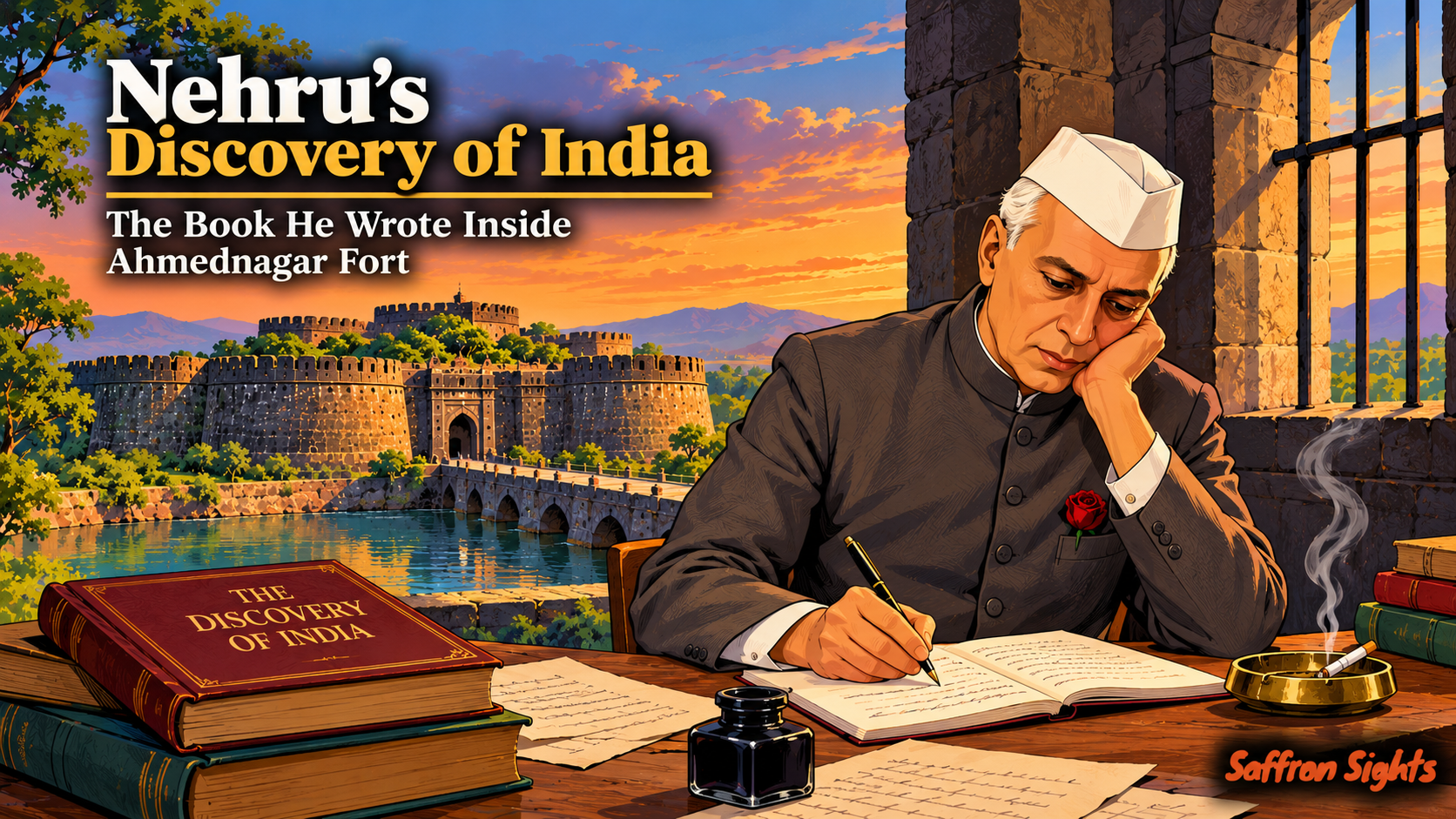
Jawaharlal Nehru wrote The Discovery of India while he was a political prisoner at Ahmednagar Fort in Maharashtra. He began it on 13 April 1944 and finished the manuscript in about five months. It was published in 1946, a year before Independence, and it is still one of the most widely read books on Indian history and identity.
The fort has a story that is older than the book. The Nizam Shahi sultans of the Deccan built it, and the British later turned it into a prison for the Congress leadership after the Quit India Movement. This guide covers the book, the fort and its builders, and two questions readers often ask about Nehru: how many wives he had, and whether he smoked.
| Detail | Summary |
|---|---|
| Book | The Discovery of India by Jawaharlal Nehru |
| Written at | Ahmednagar Fort Prison Camp, Maharashtra |
| Writing period | April–September 1944 (about five months) |
| First published | 1946, Signet Press, Calcutta |
| Fort built by | Malik Ahmad Nizam Shah I (c. 1490); rebuilt in stone under Hussain Nizam Shah I (from 1559) |
| Nehru’s wives | One: Kamala Kaul (married 1916, died 1936) |
| Did Nehru smoke? | Yes. State Express 555 is widely reported as his favourite brand |
Which Famous Book Did Nehru Write in Ahmednagar Fort?
The book is The Discovery of India. Nehru used his enforced isolation to reflect on a question that had long occupied him: what is India? Rather than a chronicle of kings and battles, he presents India as a living civilisation shaped by many traditions, languages, religions and historical encounters. The narrative runs from the Indus Valley Civilisation and Vedic–Upanishadic thought through successive cultural and political changes, and ends with British rule.
It was not Nehru’s only prison book. Glimpses of World History, written as letters to his daughter Indira, and his An Autobiography also came out of earlier jail terms. But The Discovery of India is the one tied to Ahmednagar, and its dedication says so: Nehru offered it to his “colleagues and co-prisoners” at the fort.
Inside the Prison: Leaders, Proofreaders and a Dedication
After the Quit India Resolution of August 1942, the British converted Ahmednagar Fort into a high-security prison camp. Nehru, Maulana Abul Kalam Azad, Sardar Vallabhbhai Patel, Govind Ballabh Pant, Narendra Deva, M. Asaf Ali and other senior Congress leaders were held there for nearly three years.
His fellow detainees were more than an audience. Several of them reviewed the manuscript, proofread it and offered suggestions, and Nehru singled out Azad, Pant, Narendra Deva and Asaf Ali for special thanks. The manuscript was typed only after his release, and his daughter Indira Gandhi corrected the proofs. Signet Press in Calcutta brought out the first edition in 1946.
The book later reached a far larger audience through the 1988 television series Bharat Ek Khoj, which took Nehru’s version of Indian history to viewers who might never have opened the book. Today the fort is remembered both as a prison for national leaders and as the place where confinement produced one of India’s best-known books.
Who Built Ahmednagar Fort?
Ahmednagar Fort was founded by Malik Ahmad Nizam Shah I, the first sultan of the Nizam Shahi dynasty and the man after whom the city is named. Maharashtra Tourism dates the fort to 1490, the year Malik Ahmad defeated a Bahmani army near Bhingar on the Sina River and raised a walled garden and palace to mark the victory. He founded the city of Ahmednagar a few years later, in 1494.
The early fortifications are commonly described as mud. The fort took its present form under Hussain Nizam Shah I (reigned 1553–65), who rebuilt it in stone. Major work began around 1559 and, in most accounts, was finished within three or four years. The result was a round fort with a moat, a sloping glacis and a single main entrance, which helped it hold out against repeated sieges.
The fort’s most famous defence came in the 1590s, when Queen Chand Bibi repulsed a Mughal army. The Mughals took the fort in 1600, and the last remnants of Nizam Shahi power fell in 1636. It later passed through Maratha hands before the British captured it in 1803. Today it is managed by the Armoured Corps of the Indian Army, so check access rules before planning a visit. The city itself has been officially renamed Ahilyanagar.
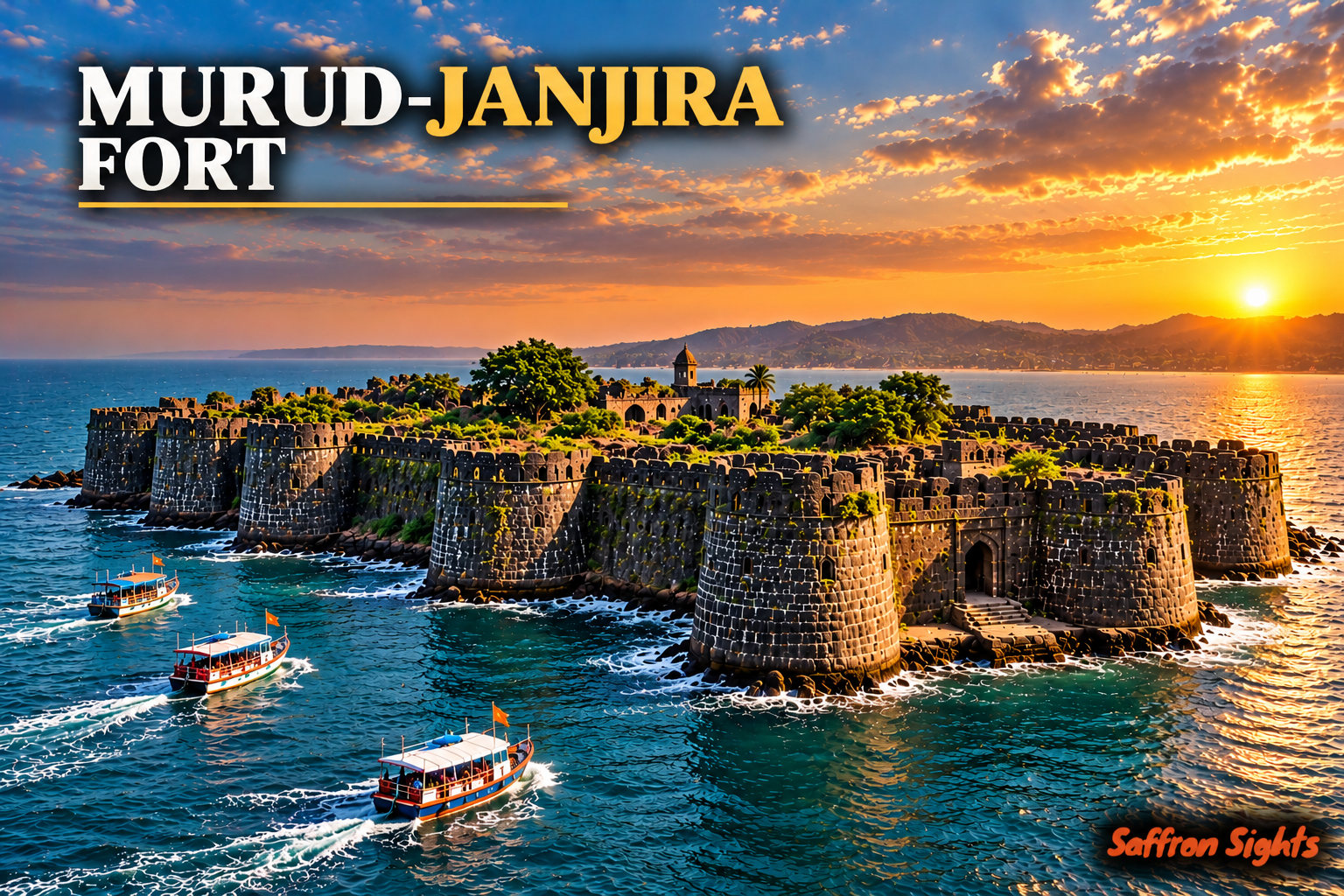
Ahmednagar was one of several great Deccan strongholds of its age. For another, read the Daulatabad Fort history, where Devagiri became a fortress, a capital and a puzzle. The Marathas who later dominated this region built and won forts of their own, from the night assault described in the Battle of Sinhagad to the sea fortress of Sindhudurg. On the Konkan coast, Murud-Janjira shows a different tradition of island fort-building. And about 120 km from Ahmednagar, in Pune, the ruined Peshwa palace of Shaniwar Wada tells the story of the power that later governed much of the Deccan.
How Many Wives Did Jawaharlal Nehru Have?
Nehru had one wife, Kamala Kaul. Their marriage was arranged, and they were married on 8 February 1916, when she was still in her teens and he was about ten years older. Their daughter Indira, later India’s first woman prime minister, was born in 1917. A son born in 1924 lived only a week.
Kamala took an active part in the freedom movement and was arrested on 1 January 1931. Her health was poor for years, and she died of tuberculosis in Lausanne, Switzerland, on 28 February 1936, aged 36. Nehru did not marry again.
Was Nehru a Smoker?
Yes. Nehru smoked cigarettes, and this is well documented. The writer Khushwant Singh recalled that Nehru smoked a cigarette after every meal. His brand was State Express 555, and in a 1956 note he described managing, with some difficulty, to find 2,000 of them for Madame Soong Ching-ling, who had said that Mao Zedong liked them too. A widely repeated story, attributed to the Madhya Pradesh Raj Bhavan, says a plane was sent from Bhopal to Indore to fetch his brand when it was not available during a visit.
Nehru also tried to cut back. In a June 1954 letter to Maulana Abul Kalam Azad, his old co-prisoner from Ahmednagar, he wrote that he had reduced his smoking considerably and hoped Azad would do the same.
Frequently Asked Questions
What is the famous book written by Jawaharlal Nehru?
His most famous work is The Discovery of India, written at Ahmednagar Fort between April and September 1944 and published in 1946. He also wrote Glimpses of World History and An Autobiography.
How many wives did Jawaharlal Nehru have?
One. He married Kamala Kaul in 1916, and she died in 1936. He never remarried.
Was Nehru a smoker?
Yes. He smoked cigarettes, with State Express 555 reported as his favourite brand. By 1954 he wrote that he had cut down considerably.
Who built Ahmednagar Fort?
Malik Ahmad Nizam Shah I, founder of the Nizam Shahi dynasty, built the original fort around 1490. Hussain Nizam Shah I rebuilt it in stone, with major work from 1559.
Keep Exploring Maharashtra’s Heritage
- Daulatabad Fort History: How Devagiri Became a Fortress, a Capital and a Puzzle
- Battle of Sinhagad History: How Tanaji Malusare Won the Fort and Lost His Life (1670)
- Sindhudurg Fort History: How Shivaji Built a Fortress in the Sea (1664–67)
- Murud-Janjira Fort History: How the Siddis Built an Island Fortress Nobody Could Take
- Shaniwar Wada History: The Peshwa Palace, a Murder and a Legend
- Chaitya Bhoomi Mumbai: Where a Nation Remembers Dr. Ambedkar
- Browse all fort stories on Saffron Sight