
Every spring, on the first day of Chaitra, Maharashtra wakes up to a new year. Bright gudis go up at the doors of homes. Streets fill with drums, flags and people in traditional clothes. If you want to see a Gudi Padwa celebration in Maharashtra at its best, three places stand out: Girgaon in Mumbai, Thane and Pune.
This guide explains what the festival means, where to see the biggest processions, which foods to try and how to enjoy the crowds in comfort.
What Is Gudi Padwa and What Does the Gudi Symbolise?
Gudi Padwa is the Marathi New Year. It falls on the first day of Chaitra, usually in March or April. For many families it is a day to start fresh. People pray, wear new clothes, draw rangoli at the door and share a festive meal.
The gudi is the heart of the day. It is raised at the entrance of the home and made from a few simple things:
- A bamboo staff
- A piece of bright silk cloth tied to the top
- Neem leaves, flowers and garlands
- An inverted copper or silver pot placed over the top
Together, these things stand for good luck, victory and prosperity. Raising the gudi is a way of inviting a good year into the house.
Making a gudi is also a small act of craft, often learned by watching elders. Maharashtra keeps other hands-on traditions alive in the same way. Around Diwali, children still build little forts from mud and brick, a custom we explain in our guide to Diwali Killa and Maratha heritage. Gudi Padwa belongs to the same world of homemade, handed-down festival art.
The festival has a public side too. Maharashtra Tourism names the shobha yatras of Girgaon, Pune and Dombivli as major celebrations of Gudi Padwa. A shobha yatra is a street procession with dhol-tasha drums, folk dance, traditional dress and community displays.
Girgaon Shobha Yatra in Mumbai
Girgaon is the best-known place to see a large Gudi Padwa procession in Mumbai. The Girgaon Shobha Yatra, also called a Nav Varsh Swagat Yatra (New Year welcome procession), is one of the city’s most popular. It is organised by Swami Vivekanand Yuva Pratishthan.
The procession traditionally begins in the morning near the Phadke Wadi Ganpati Mandir. It then moves through the old lanes of Girgaon. Reports from recent years put the start at around 7:00–8:00 am. The exact time and route can change each year, so check before you travel.
What you can see
- Dhol-tasha drummers and dhwaj pathaks (flag-bearing groups)
- Folk dances, bike rallies and colourful community processions
- Women in nauvari sarees with a nath (nose ring) and traditional jewellery
- Men in dhoti-kurta, kurta-pyjama or a pheta (turban)
- Decorated streets, rangolis and crowds from all over Mumbai
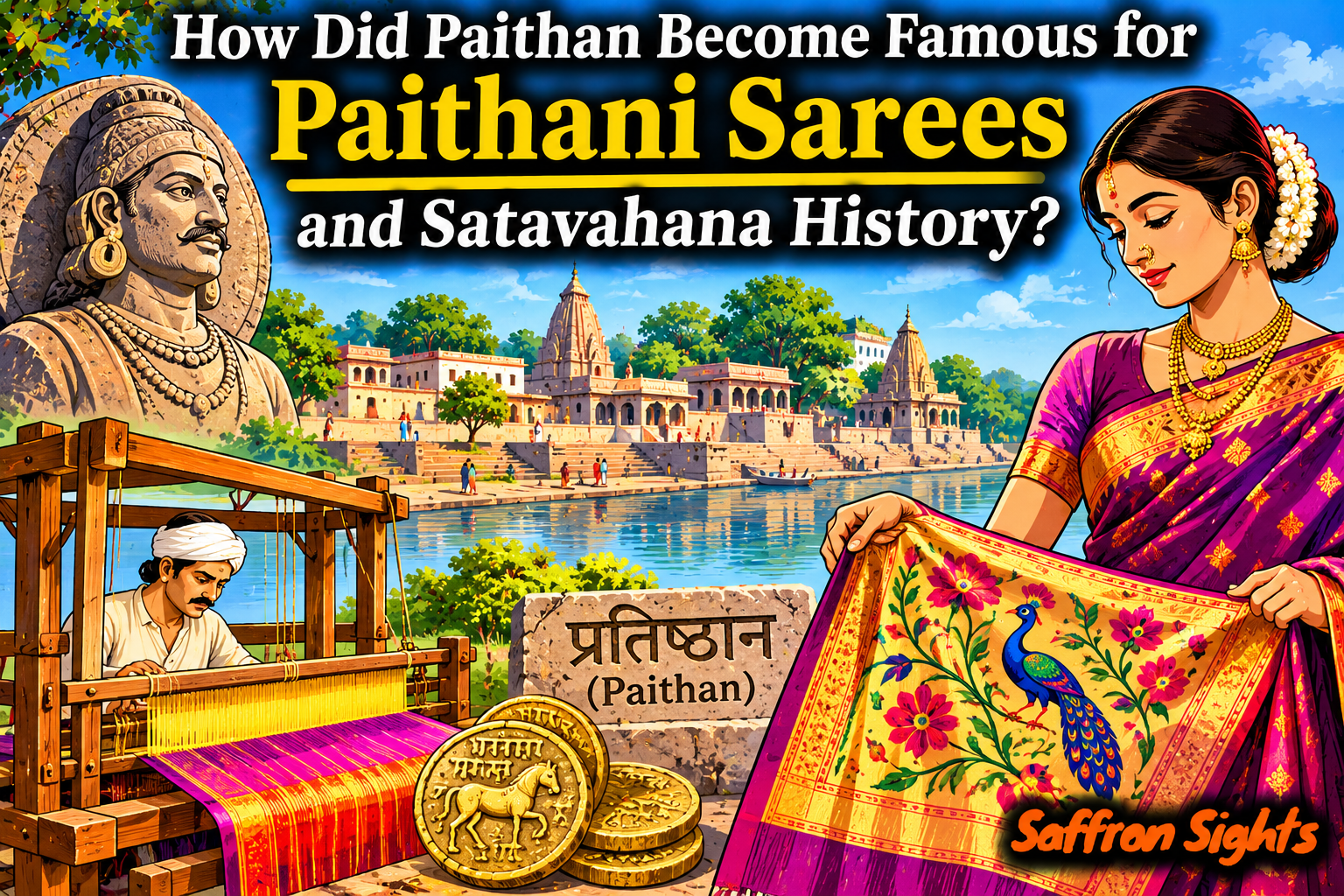
If you enjoy the craft behind festive clothing, read how Paithan became famous for Paithani sarees.
Best for: first-time visitors who want Mumbai’s most iconic, high-energy Gudi Padwa celebration. Watching is free, but the crowds are very large. Use Charni Road railway station instead of driving.
Pune and Thane Celebrations
If Girgaon feels too big, Pune and Thane offer two different ways to enjoy the festival.
Pune: The Kothrud Shobha Yatra
Pune is a strong choice for a full day of culture. Its best-known procession is in Kothrud. It traditionally starts near the statue of Chhatrapati Shivaji Maharaj and moves through the neighbourhood. Expect dhol-tasha groups, cultural performances, traditional dress and lively street celebrations. Across the city, many homes put up gudis and rangolis.
If the statue makes you curious about the king himself, read about Shivneri Fort, where Shivaji Maharaj was born. Later in the day, head to the old city and see Shaniwar Wada, the ruined Peshwa palace.
Thane: Swagat Yatra and Maha Rangoli
Thane feels more community-centred. Its Gudi Padwa Swagat Yatra has been held for more than 25 years. It passes through well-known local spots such as Gadkari Chowk and Talao Pali, with decorated arches, flags and rangolis along the way.
The big highlight is the Maha Rangoli at Gaondevi Maidan in Naupada, close to Thane station. Sanskar Bharati makes a new themed rangoli here every year. In 2026, artists used rangoli powder to create a 90-by-90-foot design on the theme of 150 years of Vande Mataram.
Which one should you pick?
- Girgaon: the most iconic and high-energy procession.
- Thane: a procession plus a giant rangoli, with a calmer feel than central Mumbai. Good for families and photographers.
- Pune: a full-day cultural experience outside Mumbai, with food, heritage areas and temples nearby.
Festival Foods: Shrikhand, Puran Poli and More
Gudi Padwa is also a festival of food. The day’s meal mixes sweet and bitter tastes, and that is part of its charm.
- Puran poli: a soft flatbread stuffed with a sweet filling of chana dal and jaggery.
- Shrikhand: a creamy sweet made from strained curd, often flavoured with cardamom or saffron.
- Neem and jaggery: a small bittersweet mix, often eaten first. It reminds people that the year ahead will bring both sweet and bitter days.
The best place to taste these is at a Marathi home, if you are lucky enough to be invited. If not, ask at a local sweet shop what they are serving for the festival.
Photography and Crowd Tips
A shobha yatra is a photographer’s dream, but it is also very busy. These tips will help you enjoy it safely and respectfully.
Plan your day
- Go early. Girgaon’s yatra has commonly begun around 7:00–8:00 am, and crowds build quickly.
- Use public transport. Charni Road station is the easy option for Girgaon. In Thane, Gaondevi Maidan is close to the station.
- Check this year’s route. Timings, starting points and themes change every year. Official organisers and local news are more reliable than older travel blogs.
Wear and carry
- Comfortable footwear, sun protection, water and a small bag are enough. Traditional Maharashtrian dress is common, but comfort matters most in a crowd.
Take better photos
- Use the soft light of the early morning.
- Look for small details: the silk cloth on a gudi, rangoli patterns, nauvari sarees, pheta turbans and the drummers’ hands.
- At the Thane Maha Rangoli, first stand back to capture the whole design. Then move closer for colour and detail.
- Keep your gear light so you can move through the crowd.
- Ask politely before taking a close portrait. A smile and a nod go a long way.
Respect the space
- Do not block the entrances of homes.
- Do not climb barricades for a better shot.
- Follow the instructions of police and volunteers.
Want to see more than one celebration? Nashik also holds a Gudi Padwa procession, linked with Kala Ram Mandir and Panchavati. Read why Nashik is such a sacred city ahead of the 2027 Simhastha Kumbh Mela before you go. Staying in Mumbai a little longer? Our guide to the Elephanta Caves has ferry tips and a half-day plan.
Frequently Asked Questions
When is Gudi Padwa celebrated?
Gudi Padwa is celebrated on the first day of Chaitra, usually in March or April. The exact date changes every year, so check a Hindu calendar before you plan your trip.
Which place is best for a Gudi Padwa celebration in Maharashtra?
Girgaon in Mumbai is best for a big, high-energy procession. Thane is best if you also want to see a giant rangoli. Pune, especially Kothrud, is a good choice for a full day of culture outside Mumbai.
What time does the Girgaon Shobha Yatra start?
It usually begins in the morning near the Phadke Wadi Ganpati Mandir. Recent reports put the start at around 7:00–8:00 am. Times and routes can change, so confirm locally before you travel.
Is it free to watch the Gudi Padwa processions?
The Girgaon Shobha Yatra is listed as a free event. It gets very crowded, so arrive early and take public transport.
What does the gudi symbolise?
The gudi stands for good luck, victory and prosperity. It is raised at the entrance of the home to welcome the new year.